
Lipid Infusion & The Solventless Revolution
Solventless extracts use mechanical means rather than solvents to extract compounds from the plant..
Solventless cannabis extracts are an ancient technology that uses mechanical methods rather than solvents like butane or CO2 to extract the medicinal compounds from the plant. Solventless extracts can be used to make a wide variety of cannabis products including: concentrates, edibles, topicals, tinctures and even beverages.
Solventless extracts are beginning to distinguish themselves from solvent extracts for a variety of reasons ranging from quality, health concerns and a preference for natural and environmentally friendly cannabis products. .
Today there has been a resurgence of solventless products coming onto the markets in California and other legal and medical states, and with it a growing appreciation among consumers for this pure and natural product.
“Craft cannabis is synonymous with the solventless extract movement”
The Revolution Will Be Solventless
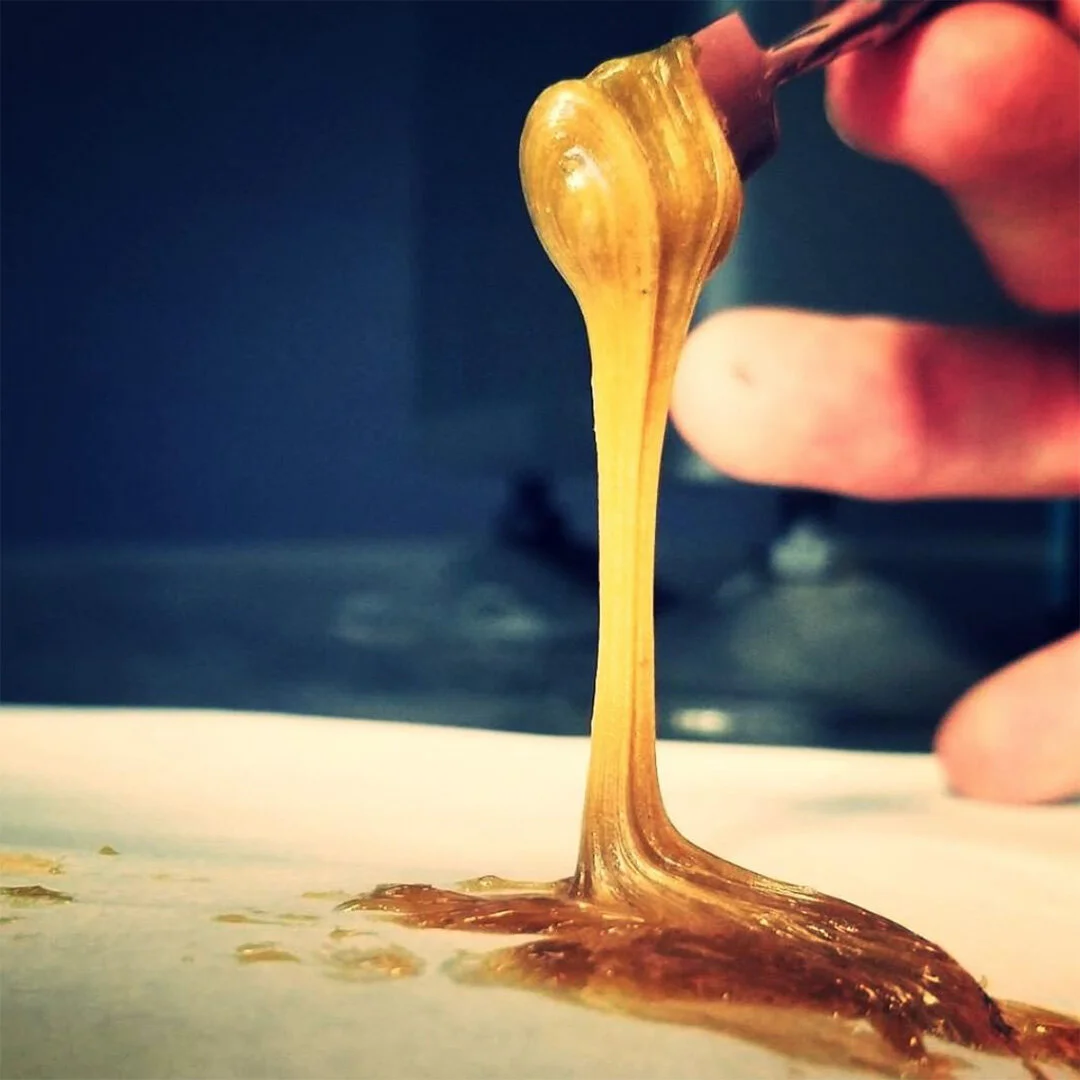
Rosin is made by pressing cannabis flower or hash between two heated plates. No solvents required. Photo courtesy of @rosin.tech
Let’s break it down.
To make a cannabis concentrate you are removing the trichomes from the cannabis plant and concentrating the desirable phytoactives, like THCA, CBDA, terpenes and flavonoids into a concentrate. This can be done in two ways: with a solvent or with mechanical methods.
The Solvent Method:
Solvent extracts, like Butane Hash Oil (BHO), are made by passing a solvent over the plant material and stripping the trichomes from the rest of the plant and then removing the solvent. Some common solvents used in the cannabis industry include: CO2, butane, ethanol, propane, naphtha, hexane, acetone, isopropyl alcohol among others, most of them violative, which has lead to a host of bad PR for the industry. Although a high quality product can be made using these methods, with the exception of CO2, there will always be trace amounts of residual solvents left over in the finished product, and the carbon footprint of all of these solvent based methods is unjustified in the face of a climate crisis with CO2 emissions as a primary concern.
The Solventless Method:
Mechanical methods, on the other hand, use no chemical solvents that have to be removed before consumption. Although water is technically a solvent (and yes we know — everything is a chemical too), we put water extraction in the solventless category because it is essentially a sifting process using only water and ice, leaves no residual solvents behind and poses no health or environmental risk. Lipid infusions typically use vegetable oil to gently remove the trichomes and mechanically separate them from the plant material. Rosin uses heat and pressure to squeeze out the gooey trichomes from the plant. All are ancient techniques that have withstood the test of time.
Solar Powered
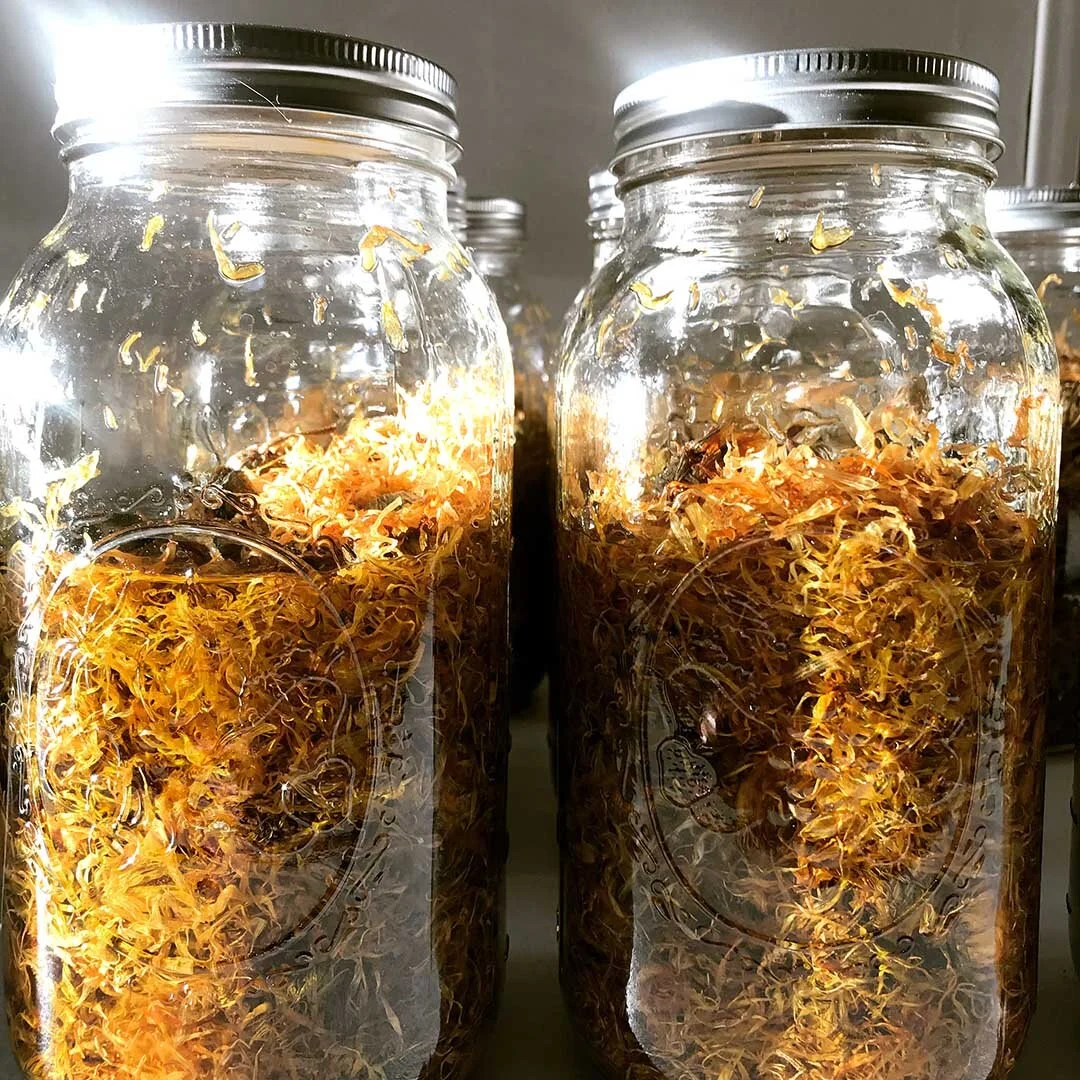
Pictured here a solar infusion of calendula in olive oil.
Similar to rosin or ice water hash, lipid infusions are solventless, meaning mechanical methods, rather than a chemical solvent, like butane, ethanol or co2, were used to extract the cannabinoids, terpenoids and flavonoids from the plant. One could say that infusions are the original solventless extract.
When I first started making cannabis infusions I used a tried and true method known as ‘solar infusion’ which uses the suns energy to gently heat the cannabis and oil mixture. Our current infusion process was directly informed by the solar method which we now mimic in a lab setting. The relative low temp of the sun allowed the cannabis plant to speak. What the solar process revealed for me was that the plant doesn't need to be altered, it’s perfect just as it is. Sun grown and solar infused!
OUR PROCESS:
LIPID INFUSED
Our lipid infusion doesn’t rely on artificial high heat or toxic chemical solvents. We simply use extra virgin olive oil, resulting in a product that is superior in its safety, stability, and concentration of cannabinoids and terpenes.
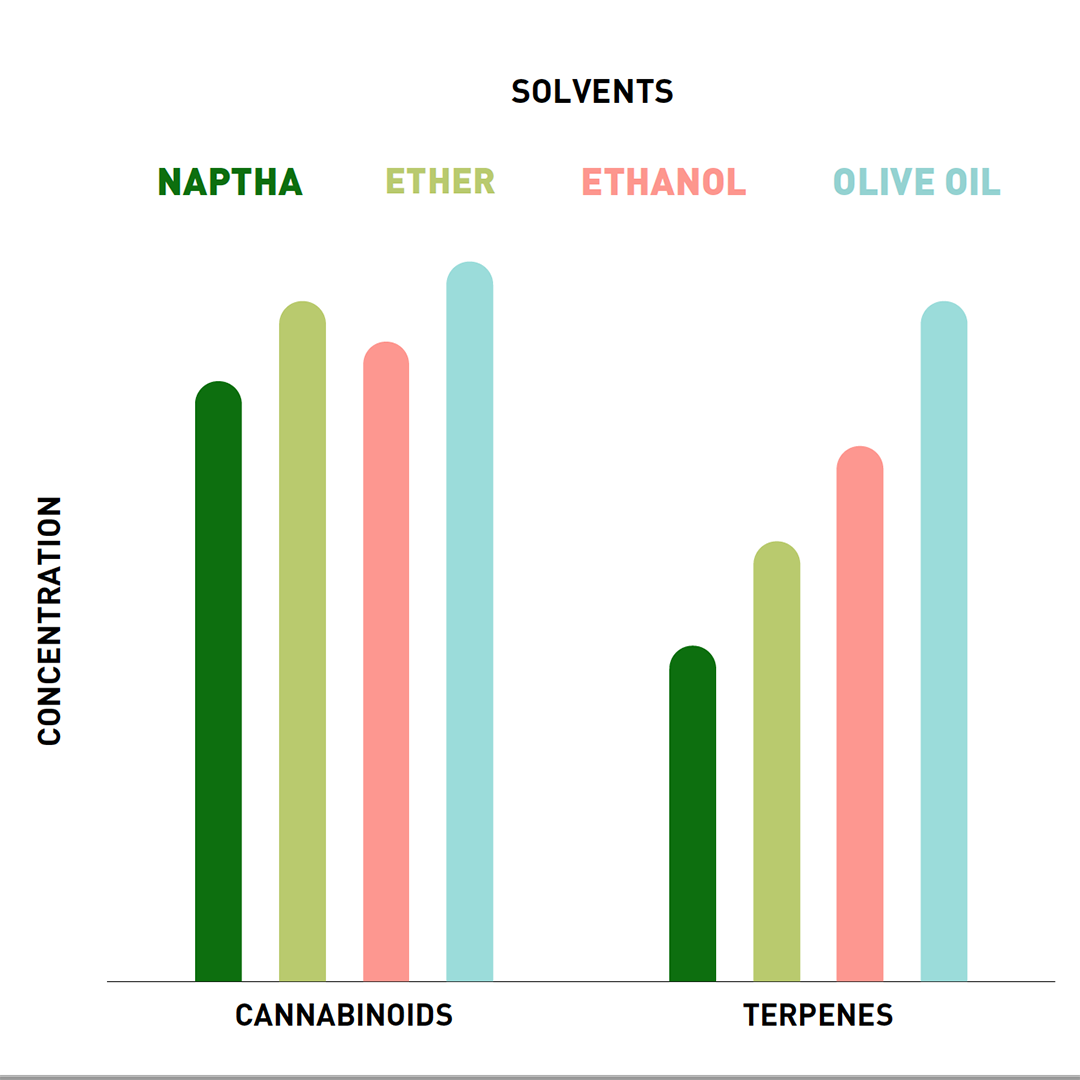
Olive oil is not only an excellent base oil for cannabis sublinguals and topicals, but also an excellent solvent for extraction of cannabinoids and terpenes. A 2013 study from Italy investigated various solvents used to extract cannabinoids, including naptha (made popular by Rick Simpsons RSO product), ether, ethanol and olive oil. The results were surprising to the researches, not only because olive oil performed better then other solvents for extracting cannabinoids, but when it came to terpene extraction olive oil was able to extract nearly double the amount of terpenes as the hydrocarbons.

Cleaner. Better
Solventless extracts offer an environmentally friendly alternative to hydrocarbon and CO2 extracts.
Solventless cannabis extracts represent a clean and sustainable alternative to solvent based extracts that currently drive the market. I love this clean process that is rooted in tradition. No co2, butane or ethanol required, just cannabis and a little elbow grease, a perfect infusion of tradition and science. Craft cannabis is synonymous with the solventless extract movement and along with California’s recently proposed regional designation and eventual organic certification for cannabis, give the craft industry verifiable differentiation from the commercial operators. At the end of the day it’s up to the consumer and I hope that by sharing relevant information and science driven articles I’ve helped make you a more informed consumer of cannabis and hemp based products.
If you have never tried a solventless product, and are searching for a good introduction, check out our Everyday Hemp Drops made from whole flower hemp and extra virgin olive oil. Like our Raw Cannabis Sublinguals, our Everyday Hemp Drops are made by infusing raw hemp and olive oil and mechanically separating the infused oil by hand. Cheers!